
Scott Adams cannot draw very well. He is not the funniest person you know. His observations about corporate life, while sharp, are not the sharpest. By the standards of any single craft, he is firmly in the “pretty good” tier — the tier nobody writes books about.
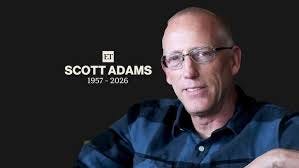
And yet Dilbert ran in over two thousand newspapers, made him wealthy, and turned him into the kind of cartoonist whose absence from the comics page would be noticed in fifty languages. How?
His answer, buried in the middle of How to Fail at Almost Everything and Still Win Big, is the most interesting idea in the book. He calls it the talent stack: a set of ordinary skills that, combined, become extraordinary. Most people chase mastery in one thing. He argues you should quietly accumulate competence in five or six things that fit together — and let the combination do the work.
It sounds modest. It is not. Once you start looking at the world through this lens, a lot of careers, companies, and even relationships start to make uncomfortable sense.
The math of being merely good
Imagine the population of people who are in the top 25% at any single skill — say, public speaking. That is one in four people. Not rare.
Now ask: how many people are in the top 25% at public speaking and writing and basic statistics and one technical domain and knowing how to run a meeting?
If those skills were independent — which roughly, for most people, they are — that is one in 1,024.
You did not become a master of any of them. You just stopped being terrible. But the combination of “merely good at five complementary things” puts you in territory that most specialists never enter, because specialists are busy going from the 95th to the 99th percentile in one place. The marginal returns there are brutal. The marginal returns on adding a fifth complementary skill, starting from zero, are absurd.
This is the engine behind a lot of careers that look like luck from the outside. The product manager who is mediocre at design, mediocre at writing SQL, mediocre at running a workshop, and mediocre at internal politics will eat the lunch of a brilliant designer who can do nothing else. The doctor who can also write clearly will own the public conversation in their field. The engineer who can present without putting a room to sleep will be running it inside a decade.
Adams’s own stack: drawing (acceptable), humour (above average), corporate life (lived through it), persuasion (studied obsessively), and the willingness to publish daily (rare). Take any one away and Dilbert never happens.
Why this is unfashionable advice
Modern career advice is allergic to “be okay at things.” We celebrate obsession, deep work, the ten-thousand-hour myth. We tell young people to “find their thing.” Schools, accelerators, Twitter — all of them reward the specialist’s narrative because it is cleaner.
The talent stack is messier. It says: pick up a second language even though you may never be fluent. Learn enough accounting to read a balance sheet, even though you will never be a CFO. Take the public speaking class. Learn the basics of design. Get conversational at one statistical method. None of it will make you famous on its own. That is the point.
Adams gives a working list of skills he thinks compound for almost anyone: public speaking, business writing, basic psychology, accounting, design fundamentals, conversation, overcoming shyness, a second language, persuasion, and proper grammar. The list is unromantic. There is no “learn to code” or “build a personal brand.” It reads like the curriculum of a half-decent 1950s liberal arts college, which is roughly what it is. That is also probably why it works.
Where the book is right
A few of Adams’s claims have aged remarkably well, and deserve to be lifted out from the rest:
Systems beat goals. A goal is a binary you fail at every day until you don’t. A system is something you succeed at every time you do it. “Lose 20 pounds in six months” is a goal you fail to meet for 179 days. “Walk for 40 minutes each morning” is a system you can win today, and again tomorrow. The energetic difference compounds. He was making this argument in 2013, before Atomic Habits made it conventional wisdom.
Manage energy, not time. Adams insists that the highest-leverage decision you make every day is whatever protects your personal energy — sleep, food, exercise, the order in which you do creative versus administrative work. The book’s odd-seeming dietary detours and “get up at 4 a.m.” anecdotes are all in service of this. You don’t need to follow his exact regimen; you do need to take seriously that being tired makes you a worse version of yourself at every other thing in your life.
Failure as tuition. He failed at restaurants, at corporate climbing, at multiple side projects, at a tech startup. Each one paid him in information. The frame is not “fail fast” — it is “fail with a notebook.” A failure that did not teach you anything is the only kind that is wasted.
Quantity of skills, not quality. This is the talent stack restated. It deserves its own line because it inverts most of what ambitious people are told.
Where I would be careful
Now, the honest part. Adams overreaches in three places.
The first is affirmations. The book leans heavily on the idea that writing or repeating a goal in a specific way somehow bends reality toward it. He attributes large chunks of his own success to this practice. He also attributes his recovery from spasmodic dysphonia — a real and serious neurological condition — to a kind of mental rewiring. These are extraordinary claims, and the evidence is a sample size of one (himself). I am not willing to dismiss it; the placebo effect is real and the mind-body interface is genuinely strange. But “I did X and then good things happened” is the oldest cognitive bias in the book, and Adams, of all people, should know it.
The second is the diet chapter, which is broadly fine but reads now like a 2013 men’s-magazine column. Some of it (eat less white starch, prefer real food, watch your blood sugar) holds up. Some of it is just personal preference dressed as universal truth. Treat it as a prompt to think about your own energy, not as a meal plan.
The third is the persuasion frame that runs through the book and dominates Adams’s later writing. Adams genuinely understands persuasion as a craft, and his observations are useful. But there is a thin line between “understanding persuasion so you are not a victim of it” and “treating every conversation as a thing to be steered.” He sometimes drifts across that line. Read this part of the book with one eyebrow up.
What this means in real life
If the talent stack is the central insight, the practical question is: how do you build one without it becoming a pile of unfinished hobbies?
A few rules I would offer, drawn from the book and from watching it play out in actual careers:
Pick complementary, not random. A second language is good. A second language plus knowledge of one foreign country’s business culture plus the relevant industry vocabulary is a stack. Stamp-collecting skills don’t compound; they cost time and pay nothing back.
Aim for top 25%, not top 5%. Going from competent to elite in any single skill takes years. Going from zero to competent takes weeks or months. Until you have a stack of five competencies, do not try to push any one to elite.
Bias toward skills that produce visible artefacts. Writing produces emails and documents. Speaking produces talks. Design produces decks. These are the skills others see and hire you for. Skills that live only inside your head — even excellent ones — compound much slower.
Add one skill a year. Not five. The point is not to be busy; it is to be cumulative. A decade of one new skill a year is more than most people manage in a lifetime.
Notice your stack already exists. Most readers of this post are already mediocre at four or five useful things and have never thought of them as a portfolio. Inventory them. The next move is usually to add the one missing piece that makes the rest twice as valuable, not to start over.
The closing case
The reason the talent stack matters is that it is one of the few honest answers to the question of how ordinary people end up doing extraordinary things. It does not require you to be a genius. It does not require a lucky break. It does not require you to find your “passion,” whatever that is. It requires patience and a slightly contrarian willingness to keep being a beginner at something, every year, for the rest of your working life.
Adams’s book has weaker chapters and stronger ones. Skip the affirmations if you must. Argue with the diet section. Roll your eyes at the bits where he sounds like a self-help guru. But take the talent stack seriously. The single best career advantage available to most people is hiding in the gap between the things they are already pretty good at, waiting for them to stop chasing mastery long enough to notice it.
This post is an original interpretation inspired by the book, not a substitute for reading it.